Empress T’Malkia Zuri

Foundational Black American (FBA): Lineage or Cult?

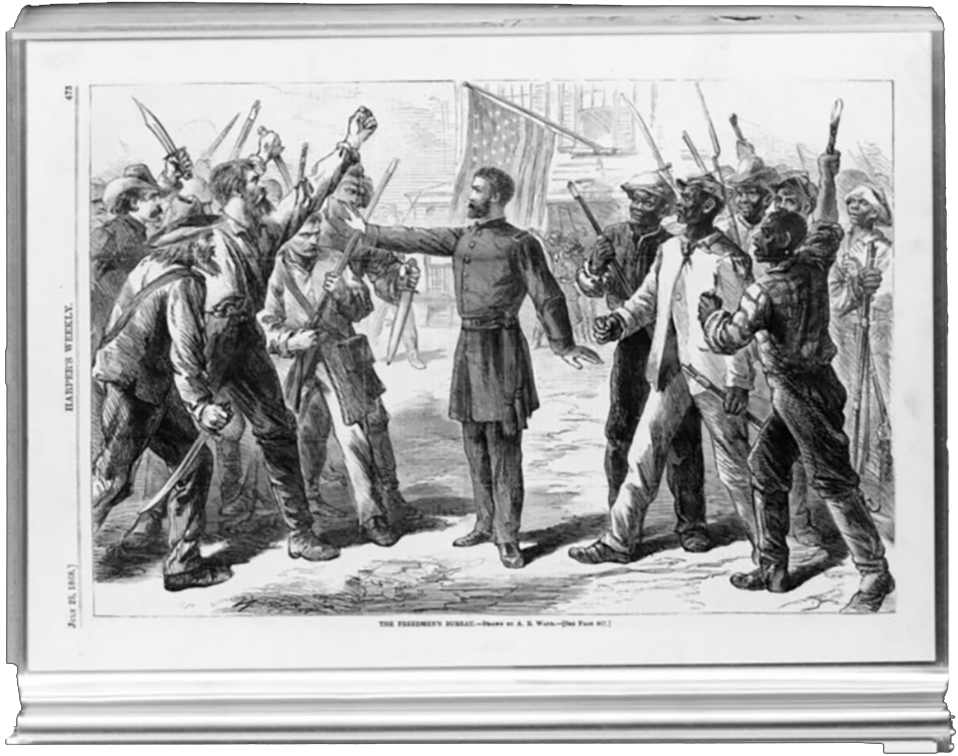
[The Freedmen’s Bureau, Drawn by A.R. Waud. Harper’s Weekly, 1868. Library of Congress] Foundational Black American (FBA): Lineage or Cult? A few years ago, I was watching content creator Tariq Nasheed, who was discussing how Black Americans are routinely grouped into crime statistics alongside immigrants who arrived in the United States long after the foundational population was already established. He pointed out a pattern many of us have observed for decades: when something negative is reported, the media collapses all so-called “Black” people into a single, undifferentiated group — regardless of origin, lineage, or historical context. His argument was straightforward: each group should be responsible for itself, and that responsibility begins with accurate identity. On multiple occasions, Nasheed used the term “Native Black American,” crediting its popular use to Dr. Claude Anderson, a well-known author and political economist whose work has long focused on Black history, economic development, and the rebuilding of Black American communities through self-sufficiency and institutional awareness. As the term Native began circulating, callers flooded Nasheed’s broadcasts claiming they too were native to America. His response was telling: the language was not strong enough. He argued that Black Americans needed an identifier that was more precise — something that could not be easily appropriated or “crowbarred” into by those without the lineage. Out of that moment, the term Foundational Black American (FBA) was introduced to me — intended to describe Indigenous Americans who had been historically reclassified as Negro, Colored, Black, African American, and similar labels over time. Now, in 2026, a new narrative has emerged. FBA is increasingly being described as a cult, with accusations that Nasheed himself is its leader. From the outside — particularly to those not of the American lineage — I understand how it can be framed that way. Any group that insists on delineation in an era obsessed with sameness is bound to face resistance. That said, I want to be clear about my own position. I do not personally use the identifier FBA. Not because I reject the lineage — I am very much of it — but because I am exhausted by the constant cycling of names. In my lifetime alone, I have been identified as Black, African American, and Black American. Each shift promised clarity and instead delivered confusion. I simply do not have room for another identifier, though I do not dismiss it either. One thing I do appreciate about the term FBA or Foundational Black American is that it was not forced upon us — unlike African American, which was publicly popularized by Rev. Jessie Jackson and politically assigned. What is notable is that many so-called African Americans are embracing the term FBA voluntarily and, in many cases, proudly. As long as native Black Americans are the ones agreeing to and defining the identifier themselves, I have no objection. This is a great sign that native Black Americans are ON CODE. What concerns me more is this: moving away from the term “African American” without replacing it with documented truth has caused real harm — especially considering that most of us may not be African by origin. Identity cannot survive on slogans or acronyms alone. Without records, land documentation, census data, newspapers, and contemporaneous evidence, any label — no matter how well-intended — will eventually be challenged, diluted, or redefined by others. That is where Trace Thy Roots stands apart. This blog is not here to promote movements, personalities, or identifiers. It exists to document, archive, and preserve the historical record of Indigenous Black Americans through primary sources — the only language history ultimately respects. Names may change. But records don’t. December 13, 2025 By T’Malkia Zuri Popular Posts All Posts Genealogy Historical Articles Matrix News Press Releases Foundational Black American (FBA): Lineage… January 25, 2026 How to Begin Black American… January 22, 2026 Walter Plecker. the Architect of… January 21, 2026 When a Name in the… January 21, 2026 Blog Category Genealogy Historical Articles Matrix News Press Releases The American Emblem Press Release for We Built This Beep January 15, 2026 | by T'Malkia Zuri We Built This [Beep] The Historical Receipts of Black American Visionaries, Builders, Farmers, and Founders For Immediate ReleaseTrace Thy Roots… Read More → Trump Says Black Americans Built America January 16, 2026 | by Empress T’Malkia Zuri Trump Says Black Americans Built America December 2, 2025 By T’Malkia Zuri A Statement Entered Into the Record In the… Read More → Dr. Claud Anderson PowerNomics : The National Plan to Empower Black America View more articles Matrix News Foundational Black American (FBA): Lineage or Cult? Empress T’Malkia ZuriJanuary 25, 2026 Genealogy, Historical Articles, Matrix News Reclassification and the Names They Called Us Empress T’Malkia ZuriJanuary 23, 2026 Genealogy How to Begin Black American Genealogy Research Empress T’Malkia ZuriJanuary 22, 2026 Genealogy, Historical Articles Walter Plecker. the Architect of Paper Genocide Empress T’Malkia ZuriJanuary 21, 2026 Historical Articles When a Name in the Bible Meant Everything Empress T’Malkia ZuriJanuary 21, 2026

Foundational Black American (FBA): Lineage or Cult? Read More »
How to Begin Black American Genealogy Research

How to Begin Black American Genealogical Research At Trace Thy Roots, we approach genealogy as recovery, not discovery. Long before records were boxed, archived, or deemed “of permanent value” by federal institutions, native Black Americans were documenting their lives in real time — through land ownership, church membership, family records, newspapers, labor contracts, military service, and community institutions. What is now called “history” was once active record-keeping by our ancestors themselves. While federal repositories such as the National Archives hold important records, Black American genealogical research cannot be completed in any single place. Our history lives across homes, counties, churches, courthouses, newspapers, and communities — often fragmented by reclassification, displacement, and omission. The steps below outline how to begin the work of reclaiming your lineage with clarity and intention. Start With Yourself — The Living Record You are not just a descendant; you are the current record holder. Begin with yourself — the known — and work backward toward the unknown. Write down everything you know about your own life and then document what you know about your parents, grandparents, and great-grandparents. Start with: Full names (including variations and nicknames) Dates of birth, marriage, and death Places lived Occupations Religious affiliations Military service Land ownership or tenancy This foundation will guide every record you search for later. Focus on Four Core Elements Across all records, genealogy relies on four essential pieces of information: Names. Dates. Places. Relationships. For native Black American research, these elements may appear inconsistently, be misspelled, reclassified, or partially recorded. Names may shift. Ages may change. Racial designations may conflict. Your role is to collect patterns, not just isolated facts. Records identify people through: Names (and name variants) Life events (birth, marriage, death) Geographic location Relationships stated or implied These elements, taken together, reveal continuity even when the record is incomplete. Begin at Home — Our First Archives The most overlooked archives are often already in your possession. Search your home and extended family for: Family Bibles Funeral programs and obituaries Newspaper clippings Birth, death, and marriage certificates Military papers Land papers and deeds Photographs (and notes written on the back) Letters, diaries, scrapbooks, and baby books These items often contain details never recorded elsewhere — especially for Black families whose lives were under-documented by institutions but well documented within the community. Relatives Are Living Sources Speak with your people. Older relatives, in particular, often carry information that never made it into official records. Family members may already have notes, documents, or oral histories passed down over generations. Ask about: Family migrations Church affiliations Land ownership or forced removal Military service Occupations Community ties Family stories that “don’t show up on paper” Oral history is not folklore — it is directional evidence that helps you know where to look next. Federal Records — Use With Context Federal records are tools, not authorities. The U.S. federal census (taken every ten years since 1790) is a key resource, but it must be read carefully when researching Black American families. Earlier censuses often listed our ancestors as unnamed tick marks or misclassified individuals. Federal records may include: Census schedules Military service and pension files Passenger arrivals and departures Naturalization records Taxation and court actions Land and homestead records These records are valuable — but they are not complete, and they are never the full story on their own. State and County Records — Where the Details Live State and county archives often hold the most actionable genealogical evidence. These records may include: State censuses Court records (civil and criminal) Probate and estate files Deed and land records Tax lists Prison and voting records County courthouses are especially important, as many Black American families appear in local records long before they appear in federal summaries. Vital Records: Birth, Marriage, and Death For most states, official birth and death registration began between 1890 and 1915. Earlier events are often documented through: Church registers Family Bibles Funeral home records Cemetery and gravestone inscriptions Newspaper announcements Marriage records are frequently among the earliest surviving documents for Black families and can provide crucial relationship links. Church Records — Spiritual and Social Anchors Churches were not just places of worship — they were record keepers, community centers, and safe repositories. Church records may include: Baptisms Marriages Funerals Membership rolls Minutes and correspondence For many Black Americans, church affiliation is the key that unlocks entire family networks. Libraries, Societies, and Independent Archives Do not limit your research to government institutions. Local libraries, historical societies, genealogical societies, and independent archives often hold: Historical newspapers Community records Private papers Organizational files Local histories omitted from mainstream narratives Trace Thy Roots exists within this tradition — curating and preserving records that speak for themselves. A Final Note Black American genealogy is not about proving existence — it is about reclaiming continuity. Our ancestors were here. They documented their lives. They built systems, towns, institutions, and legacies. The work today is to gather what already exists, restore context, and preserve it for the generations coming after us. This is not a hobby.This is legacy work. Popular Posts All Posts Genealogy Historical Articles Matrix News Press Releases Foundational Black American (FBA): Lineage… January 25, 2026 How to Begin Black American… January 22, 2026 Walter Plecker. the Architect of… January 21, 2026 When a Name in the… January 21, 2026 Blog Category Genealogy Historical Articles Matrix News Press Releases The American Emblem Foundational Black American (FBA): Lineage or Cult? January 25, 2026 | by Empress T’Malkia Zuri [The Freedmen’s Bureau, Drawn by A.R. Waud. Harper’s Weekly, 1868. Library of Congress] Foundational Black American (FBA): Lineage or Cult?… Read More → How to Begin Black American Genealogy Research January 22, 2026 | by Empress T’Malkia Zuri How to Begin Black American Genealogical Research At Trace Thy Roots, we approach genealogy as recovery, not discovery. Long before… Read More → Walter Plecker. the Architect of Paper Genocide January 21, 2026 | by Empress T’Malkia Zuri Bitter Sweet Truth: When the Architect of Paper Genocide Became a

How to Begin Black American Genealogy Research Read More »

Walter Plecker. the Architect of Paper Genocide

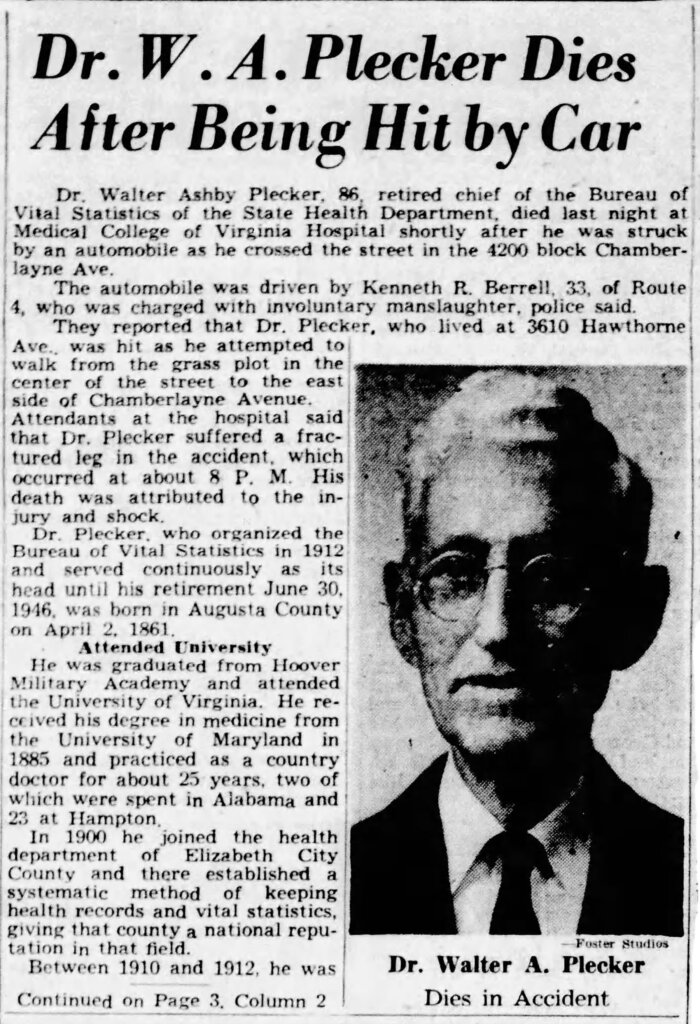
Bitter Sweet Truth: When the Architect of Paper Genocide Became a Headline June 10, 2024 By T’Malkia Zuri [Walter Plecker Obituary. Richmond Times-Dispatch Richmond, Virginia · Sunday, August 03, 1947] There is something bitter sweet about reading the obituary of Walter Ashby Plecker. Not because his death brought justice—it did not.But because history finally fixed his name to the record he tried so hard to erase. Plecker was not a footnote. He was an architect. As the longtime registrar of Virginia’s Bureau of Vital Statistics, he oversaw what can only be described as one of the largest paper genocides in American history. Through policies, letters, and administrative force, he worked relentlessly to reclassify Indigenous people as “Negro,” collapsing entire tribal identities into a single racial category designed to erase land claims, lineage, and legal standing—efforts publicly reported at the time, including a 1929 newspaper account documenting his push to have the Chickahominy Tribe classified as “Negro” for the federal census. This was not accidental.This was policy. [Virginia Indians Reclassified. Evening Herald Courier Bristol, Tennessee · Tuesday, September 10, 1929] Reclassification Was a Weapon Plecker understood something deeply dangerous:records create reality. By controlling birth certificates, marriage licenses, death records, and census classifications, he controlled who the state said you were. And once the paper changed, the law followed. Families who had lived on their land for generations—documented as Indian, Native, or tribal—were suddenly redefined with a pen stroke. Not because their ancestry changed, but because the state decided it was inconvenient. Reclassification stripped people of: Tribal recognition Land inheritance Legal identity Community continuity And once the paper trail was altered, proving the truth became an uphill battle that many families are still fighting today. [Walter Plecker Racial Studies. Richmond Times-Dispatch Richmond, Virginia · Thursday, May 16, 1946] The Effects Did Not End With Him This is why Plecker’s work still matters. When people today struggle to trace their lineage…When families find “mulatto,” “colored,” or “Negro” replacing tribal identifiers…When Indigenous Black Americans are told their ancestry is “unverifiable”… They are running into his shadow. Reclassification didn’t just erase people in the past—it destabilized their descendants’ ability to prove who they are in the present. That is the bitter part. The Sweet Part Is This: The Records Still Exist Despite everything Plecker tried to destroy or overwrite, he failed in one crucial way. The contradictions are still there.The earlier records still exist.The newspapers still speak.The land deeds, court cases, church registers, and family Bibles still tell the truth. And now, people are reading them again. What was once buried is being compared.What was once denied is being documented.What was once erased is being reclaimed. Reclassification Is Not History — It Is Ongoing We must be clear: reclassification is not a closed chapter. It continues today through: Census definitions DNA misinterpretation Cultural replacement Identity dilution The dismissal of documented lineage in favor of narrative Understanding Plecker is not about dwelling on the past—it is about recognizing a system that never fully ended. Remember This Walter Plecker died.His policies outlived him. But so did the truth. And every time someone traces their roots, challenges a record, or restores a family name to its rightful place, that truth pushes back against the paper genocide he helped engineer. That is the bitter sweet reality. History may delay accountability—but it does not forget. Uncategorized Dump Empress T’Malkia ZuriJanuary 24, 2026 Genealogy, Historical Articles, Matrix News Reclassification and the Names They Called Us Empress T’Malkia ZuriJanuary 23, 2026 Genealogy How to Begin Black American Genealogy Research Empress T’Malkia ZuriJanuary 22, 2026 Genealogy, Historical Articles Walter Plecker. the Architect of Paper Genocide Empress T’Malkia ZuriJanuary 21, 2026 Historical Articles When a Name in the Bible Meant Everything Empress T’Malkia ZuriJanuary 21, 2026

Walter Plecker. the Architect of Paper Genocide Read More »

When a Name in the Bible Meant Everything

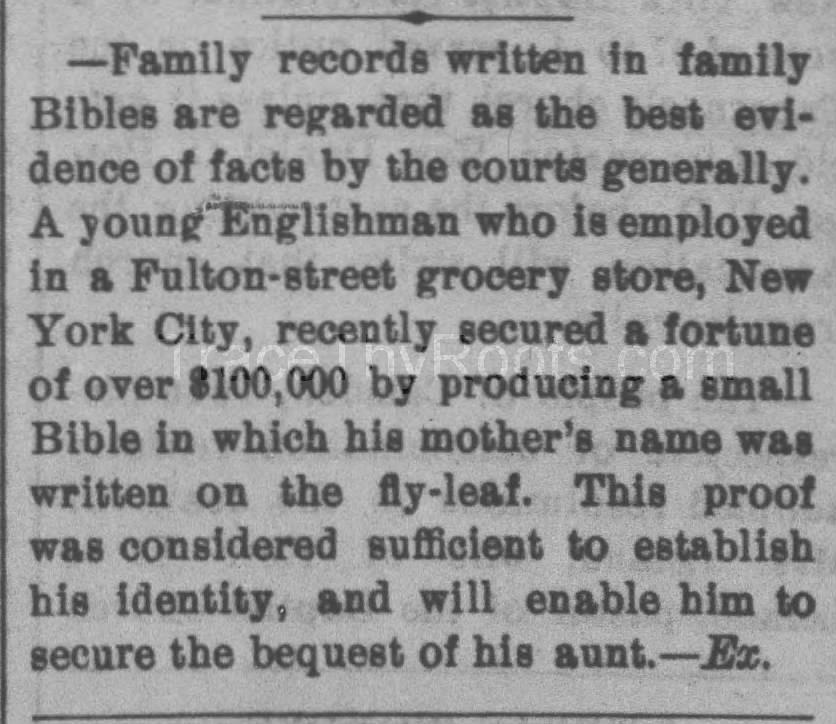
When a Name in a Bible Meant Everything: Why Tracing Your Roots Still Matters September 6, 2024 By T’Malkia Zuri Why Tracing Your Roots Is an Act of Protection Genealogy is not about nostalgia. It is about defense. In earlier eras, a Bible entry could secure a fortune. Today, documentation can: Protect cultural identity Prevent historical erasure Challenge false narratives Establish rightful belonging When genealogy is dismissed as unnecessary or “old-fashioned,” its purpose is misunderstood. Genealogy has always been a shield. Genealogy Was Never About Curiosity — It Was About Proof For generations, genealogy served a practical and necessary purpose: Establishing identity Securing inheritance Proving lineage Protecting land, name, and legal standing Long before centralized record systems, families preserved their truth in Bibles, ledgers, newspapers, deeds, and court filings. These records carried legal weight because they were created close to the events themselves—by people who were present for births, deaths, marriages, and kinship ties. This is especially important when discussing Native Black American history. Our ancestors documented themselves. The issue is not a lack of records—it is that many people have never been taught where to look or how to read them. [“Family records written in family Bibles regarded as the best evidence of facts by the courts generally.” The Baptist and Reflector (Nashville, Tennessee), November 11, 1897.] There was a time when ancestry was not debated on social media or guessed through DNA percentages. It was documented. The newspaper clipping above makes something unmistakably clear: family records written in Bibles were regarded by American courts as the best evidence of identity. Not opinions. Not assumptions. Not vibes. Records. In the case cited, a young man in New York City secured a fortune—more than $100,000—because a small family Bible contained his mother’s name, handwritten on the flyleaf. That single entry was enough to establish who he was, where he came from, and his rightful legal claim. That is not folklore. That is law, history, and documentation working together. Why Documentation Matters Now More Than Ever We are living in a time when identity is being diluted by repetition rather than evidence. Increasingly, individuals—particularly immigrants—publicly claim Indigenous American ancestry without: Tribal enrollment Historical presence in U.S. records Land allotments Freedmen or pre-1900 census ties Community continuity In many cases, these claims rest on oral assertions or distant DNA interpretations, not contemporaneous documentation. But history does not work backwards. You do not become Indigenous to a land because you arrived later and adopted its language, culture, or politics. Indigeneity is established through presence, continuity, and record. Records Tell the Story That Claims Cannot Primary-source records—newspapers, land deeds, probate files, court cases, tax rolls, and city directories—tell us: Who was already here Who owned land Who built towns Who paid taxes Who was classified, reclassified, or erased When these records are examined honestly, a consistent truth emerges: Native Black Americans were documented on this land long before many modern claimants arrived. That is not an opinion. It is a paper trail. The Difference Between Heritage and Assertion Everyone has a heritage. Not everyone has a documented lineage tied to this land. Claiming Indigenous American ancestry without records does not strengthen history—it weakens it. It replaces evidence with assumption and turns lived experience into abstraction. This is why tracing your roots matters. Not for validation—but for clarity. [World’s Best Selling Book is the Bible. South-Side News Chicago, Illinois · Friday, April 10, 1925] Were Family Bibles Ever Targeted in the United States? There has never been a single federal law requiring all U.S. citizens to surrender their Bibles. That fact is often used to dismiss the idea that religious and family records were intentionally targeted. But the absence of a nationwide statute does not mean these records were protected. In practice, family Bibles and other genealogical records were frequently confiscated, restricted, invalidated, or destroyed through local and institutional systems, including: Colonial and territorial authorities Slaveholding systems and plantation governance Local courts and municipal enforcement Missionary-led “civilizing” and assimilation programs State- and church-controlled record replacement systems These actions did not require a federal mandate. They operated through custom, coercion, enforcement, and circumstance, often under the guise of order, conversion, or property control. Family Bibles were not merely religious texts. They were legal documents—containing handwritten records of births, marriages, deaths, and kinship that once carried weight in American courts. Because of that, they posed a problem. When identity needed to be erased, altered, or reassigned, family-held documentation became a liability to those in power. Removing or invalidating these records made it easier to sever lineage, dissolve inheritance claims, and reclassify people outside their own recorded history. So while the United States never issued a blanket command to “turn in your Bible,” the historical reality is clear: Wherever control over identity was required, family Bibles were vulnerable—and often lost. That loss was not accidental. And its effects are still being felt today. Uncategorized Walter Plecker. the Architect of Paper Genocide Empress T’Malkia ZuriJanuary 21, 2026 Historical Articles When a Name in the Bible Meant Everything Empress T’Malkia ZuriJanuary 21, 2026 Matrix News This Ain’t Our Fight: Why Black Panther History Is Being Misused Empress T’Malkia ZuriJanuary 20, 2026 Matrix News Trump Says Black Americans Built America Empress T’Malkia ZuriJanuary 16, 2026 Press Releases Press Release for We Built This Beep T'Malkia ZuriJanuary 15, 2026

When a Name in the Bible Meant Everything Read More »

This Ain’t Our Fight: Why Black Panther History Is Being Misused

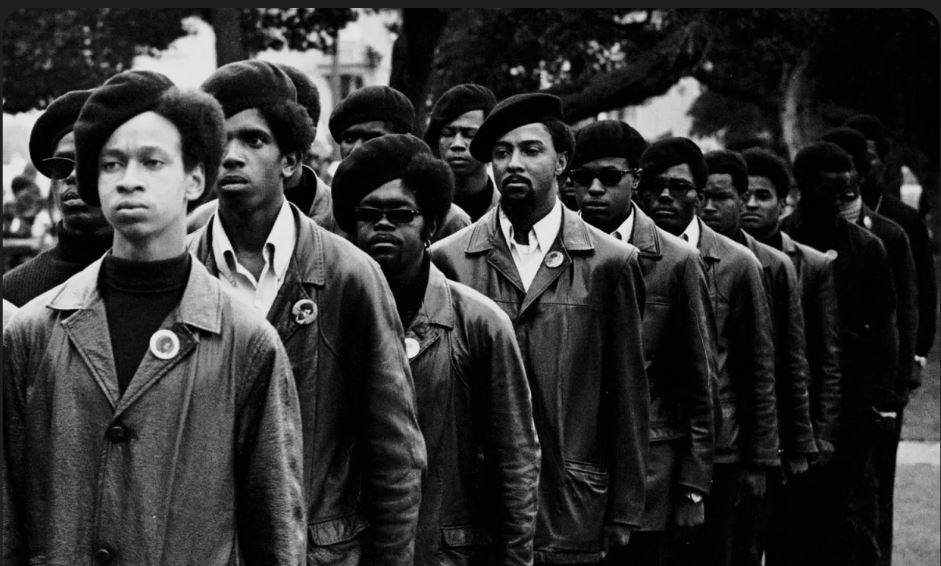
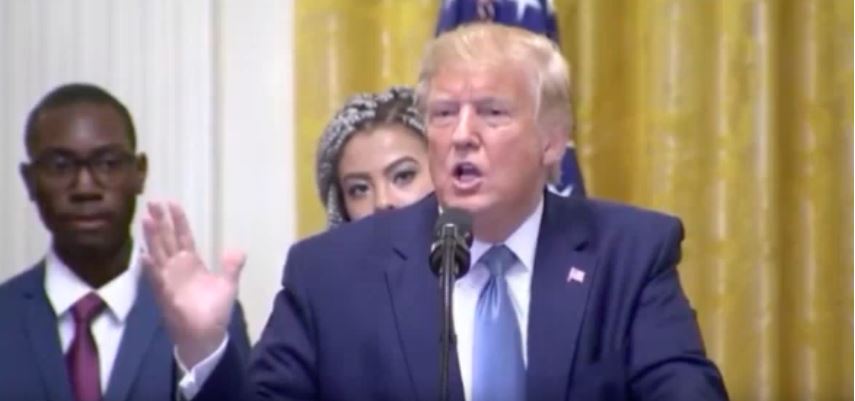
This Ain’t Our Fight: Why Black Panther History Is Being Misused — Again January 18, 2026 By T’Malkia Zuri Julio P. Newton???? Where yo’ people from for real? Because what we are watching right now isn’t solidarity — it’s historical misdirection. Groups are running around in “black” radical aesthetics, invoking the Black Panther name, threatening ICE, and dragging so-called Black Americans into immigration battles that were never ours, never centered us, and were never part of our historical movements. That’s not just inaccurate — it’s dangerous. [Screenshot from publicly circulated video of an anti-ICE protest in Philadelphia showing a group calling itself the “Black Panther Party for Self-Defense” (January 2025).] The Problem With “Tether Panthers” Let’s be very clear: This new wave of so-called Panther groups — what many of us are calling “Tether Panthers” — is not the historical Black Panther Party. Borrowing berets, leather jackets, patrol language, or militant aesthetics does not create historical continuity. And more importantly: 👉 Immigration enforcement was not a Black Panther platform issue. What the REAL Black Panther Party Actually Fought For The Black Panther Party for Self-Defense, founded in 1966, emerged from very specific conditions facing native Black Americans living under U.S. state power. Their work centered on: Police brutality and state violence Economic exploitation of Black communities Housing, education, and healthcare Political self-determination for Black people Opposition to U.S. imperialism and foreign wars Their mission was domestic, community-based, and self-determined. Not immigration.Not deportation policy.Not defending non-citizens. https://youtu.be/IrZIEMrmVrw?si=VFAu66YkxVG7lPjG [Newsreel Footage of Black Panther Party Rally and Student Protests, Alameda County, California. ca. 1966–1969. Records of the Federal Bureau of Investigation. National Archives Identifier 12101. Video.] The Ten-Point Program Makes This Plain The Panthers didn’t leave their politics vague. They wrote them down. The Ten-Point Program demanded: Jobs for Black people Housing fit for human beings An end to exploitation of Black communities Control of institutions affecting Black lives [President Donald J. Trump speaking at the White House Black History Month reception, February 20, 2017. Screenshot from official White House video. Courtesy of PBS.] That absence is not accidental. The Panthers were fighting for a people already here, already targeted, already dispossessed — native Black Americans whose labor built this country and whose communities were under siege. Autochthonous Means Indigenous — Not Imported Many of us are Autochthonous Americans of Turtle Island. We didn’t cross borders.The borders crossed us. So no — everyone does not get to conscript us into their political fights, wrap themselves in Black history, and then call it “Panther energy.” Many of us want you GONNNNNNEEEE. ✈️🛬That’s not hatred. That’s delineation. 🪶🪶🪶👆👆👆 A Necessary Clarification on Modern Groups Recent social-media statements claim certain modern organizations are “the original Black Panthers” or direct continuations of the historic movement. Here’s the factual reality: Inspiration ≠ lineage Community patrols ≠ Panther ideology Aesthetic similarity ≠ organizational continuity The original Black Panther Party: Was centrally organized Produced written doctrine Operated within a defined political era Disbanded as a national organization by the early 1980s Claims of continuity must be measured against documented structure, ideology, and purpose — not symbolism. [Screenshot of a public Facebook statement clarifying affiliations of groups identifying as Black Panthers, distinguishing historically recognized organizations from unaffiliated groups (January 2026). This document is presented for historical record and analysis only. Inclusion does not constitute endorsement of any organization or claims contained within the statement.] Why This Matters Now When Black political history is blurred: Black Americans take the heat Black Americans get surveilled Black Americans get blamed All while our unresolved issues — land, lineage, political recognition, reparative justice — are pushed aside once again. We’ve seen this movie before. This ain’t our fight. Final Word for the Record Clarifying what the Black Panther Party was — and what it was not — is not gatekeeping. It is historical responsibility. This is documentation, not denunciation.And documentation is how history survives distortion. Sources & Archival References Black Panther Party for Self-Defense, Ten-Point Program (1966) Joshua Bloom & Waldo E. Martin Jr., Black Against Empire Stanford University & Library of Congress Black Panther archives Editor’s note: This article references publicly available social-media content for the purpose of historical clarification and commentary. All names and trademarks belong to their respective owners. Press Releases Press Release for We Built This Beep T'Malkia ZuriJanuary 15, 2026 Matrix News Trump Says Black Americans Built America Empress T’Malkia ZuriJanuary 16, 2026 Uncategorized This Ain’t Our Fight: Why Black Panther History Is Being Misused Empress T’Malkia ZuriJanuary 20, 2026

This Ain’t Our Fight: Why Black Panther History Is Being Misused Read More »

Trump Says Black Americans Built America

Trump Says Black Americans Built America December 2, 2025 By T’Malkia Zuri In the current public discourse, it has become increasingly common to hear the claim that immigrants built America. This assertion is repeated across media, political commentary, and public debate, often presented as a settled truth rather than a contested narrative. What is frequently absent from these conversations is a clear distinction between who built the foundational systems of the country and who arrived later to participate in an existing structure. The compression of these timelines has produced confusion, erasure, and, in some cases, the replacement of one historical record with another. It is within this climate that certain statements carry added weight—particularly when they acknowledge Black American contribution at the level of national foundation. That is why moments of public recognition, when they occur, must be documented precisely and preserved as part of the historical record. One such moment occurred during the previous presidential administration. https://tracethyroots.com/wp-content/uploads/2026/01/Trump-Says-AA-built-America.mp4 Video Source: Public remarks by Donald Trump, recorded during a visit to a Historically Black College and University. Footage originally broadcast by PBS and preserved here for archival reference. In October 2019, during remarks delivered at the Young Black Leadership Summit, then–U.S. President Donald Trump addressed an audience of Black students and young professionals. During his speech, he stated: “You built the nation… you know you’re just starting to get real credit for that, OK.” The statement was delivered publicly, on record, and in a setting specifically focused on Black leadership development. This post exists to document that moment and preserve it as part of the historical record. Why This Statement Is Being Archived At Trace Thy Roots, our mission is not to argue narratives — it is to preserve documented moments that speak for themselves. This statement aligns with: Historical newspapers documenting Black American town builders Census and land records showing Black American land ownership Patent filings and industrial records tied to Black American innovation Infrastructure, agricultural, and trade systems built by Black Americans The statement did not create this truth.It recognized a truth already supported by evidence. Editor’s Note This post does not endorse any political party, candidate, or campaign. It exists solely to document a public statement related to Indigenous Black American historical contribution and to ensure that the record remains accessible. Additional Resources For readers seeking documented historical evidence that predates and contextualizes modern political statements, the published volume We Built This [Beep] compiles historical receipts demonstrating Black American foundational labor, land ownership, innovation, and system-building across the United States. The book serves as a permanent archival record, grounding contemporary acknowledgments in documented history rather than debate.   Read more about the book here: Popular Posts All Posts Genealogy Historical Articles Matrix News Press Releases Foundational Black American (FBA): Lineage… January 25, 2026 How to Begin Black American… January 22, 2026 Walter Plecker. the Architect of… January 21, 2026 When a Name in the… January 21, 2026 Blog Category Genealogy Historical Articles Matrix News Press Releases The American Emblem Blog Tag American Builders archival documentation Autochthonous Americans Black American builders historical receipts Black American foundations Black American genealogy Black American history Black American identity Black Americans Black history archives Black Panther history Black Panther Party Black political history Bobby Seale cultural appropriation Donald Trump Dr Claud Anderson family bible genealogy FBA FBA Lineage or Cult Foundational Black American genealogy documentation historical acknowledgment historical misrepresentation historical receipts historical record Huey P. Newton ICE protests immigration debate Indigenous Black Americans Kathleen Cleaver media archive media distortion native Black American history Panther Ten-Point Program Paul Birdsong Philadelphia protest political co-optation presidential remarks documented history press release primary source records public statements Tariq Nasheed Trace Thy Roots We Built This Beep View more articles Matrix News Foundational Black American (FBA): Lineage or Cult? Empress T’Malkia ZuriJanuary 25, 2026 Genealogy, Historical Articles, Matrix News Reclassification and the Names They Called Us Empress T’Malkia ZuriJanuary 23, 2026 Genealogy How to Begin Black American Genealogy Research Empress T’Malkia ZuriJanuary 22, 2026 Genealogy, Historical Articles Walter Plecker. the Architect of Paper Genocide Empress T’Malkia ZuriJanuary 21, 2026 Historical Articles When a Name in the Bible Meant Everything Empress T’Malkia ZuriJanuary 21, 2026

Trump Says Black Americans Built America Read More »

Scroll to Top