This Ain’t Our Fight: Why Black Panther History Is Being Misused
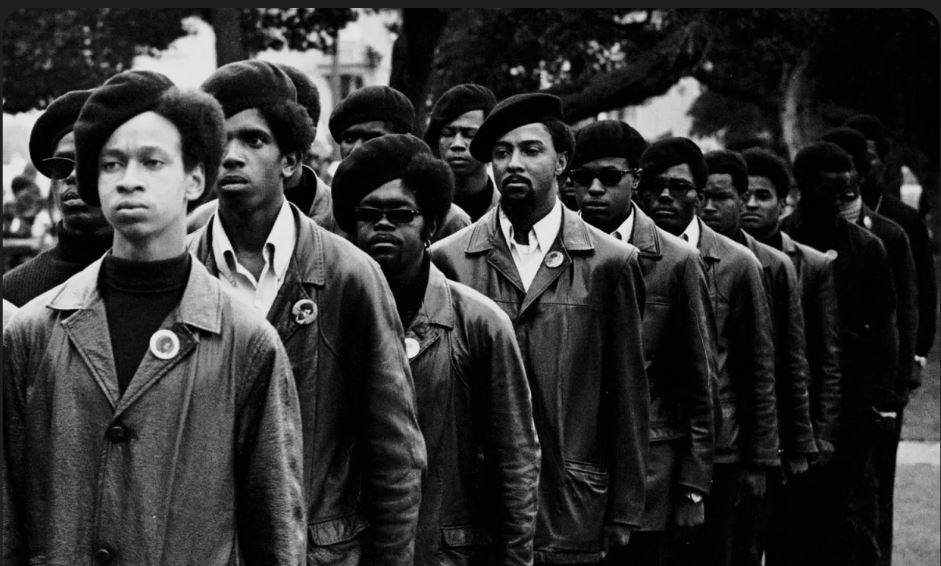
This Ain’t Our Fight: Why Black Panther History Is Being Misused — Again January 18, 2026 By T’Malkia Zuri Julio P. Newton???? Where yo’ people from for real? Because what we are watching right now isn’t solidarity — it’s historical misdirection. Groups are running around in “black” radical aesthetics, invoking the Black Panther name, threatening ICE, and dragging so-called Black Americans into immigration battles that were never ours, never centered us, and were never part of our historical movements. That’s not just inaccurate — it’s dangerous. [Screenshot from publicly circulated video of an anti-ICE protest in Philadelphia showing a group calling itself the “Black Panther Party for Self-Defense” (January 2025).] The Problem With “Tether Panthers” Let’s be very clear: This new wave of so-called Panther groups — what many of us are calling “Tether Panthers” — is not the historical Black Panther Party. Borrowing berets, leather jackets, patrol language, or militant aesthetics does not create historical continuity. And more importantly: 👉 Immigration enforcement was not a Black Panther platform issue. What the REAL Black Panther Party Actually Fought For The Black Panther Party for Self-Defense, founded in 1966, emerged from very specific conditions facing native Black Americans living under U.S. state power. Their work centered on: Police brutality and state violence Economic exploitation of Black communities Housing, education, and healthcare Political self-determination for Black people Opposition to U.S. imperialism and foreign wars Their mission was domestic, community-based, and self-determined. Not immigration.Not deportation policy.Not defending non-citizens. https://youtu.be/IrZIEMrmVrw?si=VFAu66YkxVG7lPjG [Newsreel Footage of Black Panther Party Rally and Student Protests, Alameda County, California. ca. 1966–1969. Records of the Federal Bureau of Investigation. National Archives Identifier 12101. Video.] The Ten-Point Program Makes This Plain The Panthers didn’t leave their politics vague. They wrote them down. The Ten-Point Program demanded: Jobs for Black people Housing fit for human beings An end to exploitation of Black communities Control of institutions affecting Black lives [President Donald J. Trump speaking at the White House Black History Month reception, February 20, 2017. Screenshot from official White House video. Courtesy of PBS.] That absence is not accidental. The Panthers were fighting for a people already here, already targeted, already dispossessed — native Black Americans whose labor built this country and whose communities were under siege. Autochthonous Means Indigenous — Not Imported Many of us are Autochthonous Americans of Turtle Island. We didn’t cross borders.The borders crossed us. So no — everyone does not get to conscript us into their political fights, wrap themselves in Black history, and then call it “Panther energy.” Many of us want you GONNNNNNEEEE. ✈️🛬That’s not hatred. That’s delineation. 🪶🪶🪶👆👆👆 A Necessary Clarification on Modern Groups Recent social-media statements claim certain modern organizations are “the original Black Panthers” or direct continuations of the historic movement. Here’s the factual reality: Inspiration ≠ lineage Community patrols ≠ Panther ideology Aesthetic similarity ≠ organizational continuity The original Black Panther Party: Was centrally organized Produced written doctrine Operated within a defined political era Disbanded as a national organization by the early 1980s Claims of continuity must be measured against documented structure, ideology, and purpose — not symbolism. [Screenshot of a public Facebook statement clarifying affiliations of groups identifying as Black Panthers, distinguishing historically recognized organizations from unaffiliated groups (January 2026). This document is presented for historical record and analysis only. Inclusion does not constitute endorsement of any organization or claims contained within the statement.] Why This Matters Now When Black political history is blurred: Black Americans take the heat Black Americans get surveilled Black Americans get blamed All while our unresolved issues — land, lineage, political recognition, reparative justice — are pushed aside once again. We’ve seen this movie before. This ain’t our fight. Final Word for the Record Clarifying what the Black Panther Party was — and what it was not — is not gatekeeping. It is historical responsibility. This is documentation, not denunciation.And documentation is how history survives distortion. Sources & Archival References Black Panther Party for Self-Defense, Ten-Point Program (1966) Joshua Bloom & Waldo E. Martin Jr., Black Against Empire Stanford University & Library of Congress Black Panther archives Editor’s note: This article references publicly available social-media content for the purpose of historical clarification and commentary. All names and trademarks belong to their respective owners. Press Releases Press Release for We Built This Beep T'Malkia ZuriJanuary 15, 2026 Matrix News Trump Says Black Americans Built America Empress T’Malkia ZuriJanuary 16, 2026 Uncategorized This Ain’t Our Fight: Why Black Panther History Is Being Misused Empress T’Malkia ZuriJanuary 20, 2026
This Ain’t Our Fight: Why Black Panther History Is Being Misused Read More »